
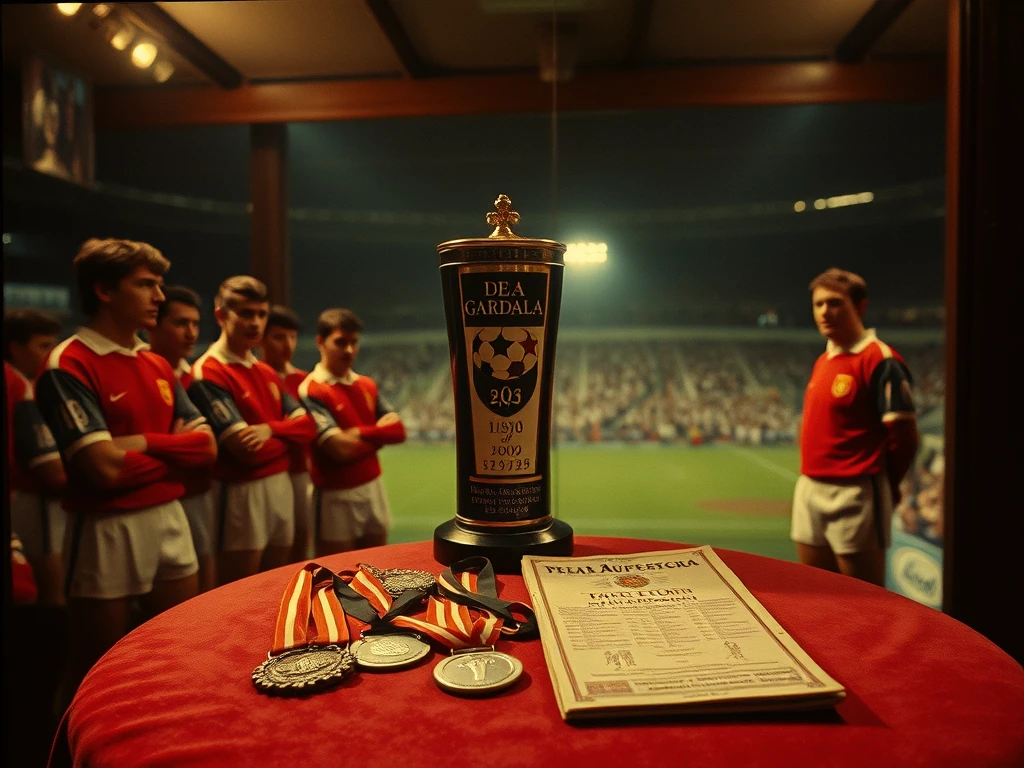
In the early 1950s, VfB Stuttgart was undergoing a phase of change and renewal. After World War II, the club faced the challenges of rebuilding and competition in the Oberliga. However, the years from 1950 to 1957 would lay the foundation for a glorious future.
One of the key moments of this era was the appointment of coach Georg Wurzer in 1952. Wurzer brought fresh ideas to the team and implemented an offensive style of play that was revolutionary for the time. Under his leadership, the team underwent a remarkable transformation, reflected in their match performances and the attractiveness of their play.
Another crucial factor was the return of players who had been lost during the war or had returned from abroad. Talents like striker Hermann Gerland and defender Karl-Heinz Riedle were instrumental in strengthening the squad. Their individual skills and the newly formed team chemistry led VfB Stuttgart to win the Oberliga Süd championship in 1954 and qualify for the final round of the German championship.
In the final round, which featured the best teams in Germany, Stuttgart delivered an impressive performance, reaching the semifinals. Although they ultimately did not win the championship, the journey was a clear indication that VfB Stuttgart was on the rise again. These successes attracted numerous new fans and solidified the club's support in the Stuttgart region.
The 1950s marked not only a sporting revival but also a cultural renewal of the club's identity. VfB Stuttgart began to establish itself as one of the leading addresses in German football, and the city of Stuttgart became increasingly associated with the club's success. The achievements of this era laid the groundwork for the club's flourishing in the 1980s and beyond.
Today, as we look back on this period, we can see the course that VfB Stuttgart set in the 1950s. The successes and philosophy developed during that time continue to shape the club today and are part of its legacy. VfB Stuttgart remains a symbol of consistency and passion in German football, and the memories of the 1950s are an important part of that story.